
Table of Contents
Toggle//Temple Wedding Bridal Makeup Guide
INTRODUCTION:
Temple Wedding Bridal Makeup Guide helps South Indian brides create a timeless and elegant look for their special day. A temple wedding is one of the most spiritually significant and visually beautiful ceremonies in South India. The sacred surroundings, traditional music, fragrant flowers, and the warmth of family create an atmosphere that is entirely unique. Your bridal look for a temple wedding should honour this environment with authentic makeup, traditional styling, and graceful elegance. In this Temple Wedding Bridal Makeup Guide, Asifa Bridal Studio shares expert tips to help brides choose the perfect makeup style, jewellery, hairstyle, and overall bridal appearance for a memorable temple wedding.
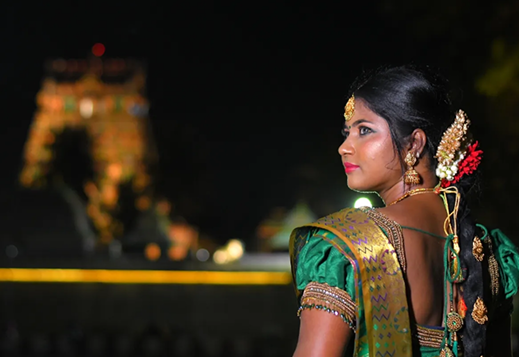
What Makes Temple Wedding Makeup Different
Temple wedding makeup must balance:
Temple environments call for respectful, traditional aesthetics
Most muhurthams start between 5 AM and 9 AM
Outdoor temple lighting is natural and warm, requiring specific tonal choices
Ceremonies can last 3–4 hours in potentially warm conditions
The Traditional Temple Bride Look

A natural, glowing base — not heavy coverage. The temple’s natural light is flattering and doesn’t require heavy foundation.
Classic kajal-defined eyes with a simple dark kohl waterline. This is the most culturally appropriate and beautiful choice for temple ceremonies.
Naturally defined, well-groomed brows. Clean and polished.
Deep red, dark maroon, or vermillion — the traditional colours of auspicious occasions in Tamil culture. A clean, well-defined lip in these shades is both appropriate and beautiful.
Soft, warm rose blush for a natural flush.
Minimal — the goal is enhancement, not transformation.
Saree Draping for Temple Weddings
Madisar: For Tamil Brahmin ceremonies — the traditional nine-yard ceremonial draping.
Nivi in Kanjeevaram: The most common choice. A well-draped Kanjeevaram silk in the Nivi style is both beautiful and appropriate.
Kasavu: For Kerala temple ceremonies — the cream and gold saree with traditional draping.
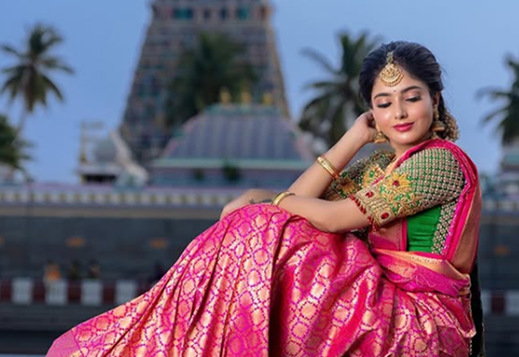

The Flower and Jewellery Coordination
Jasmine (Malligai): The quintessential temple wedding flower. We coordinate the hair and floral arrangement with the overall bridal look.
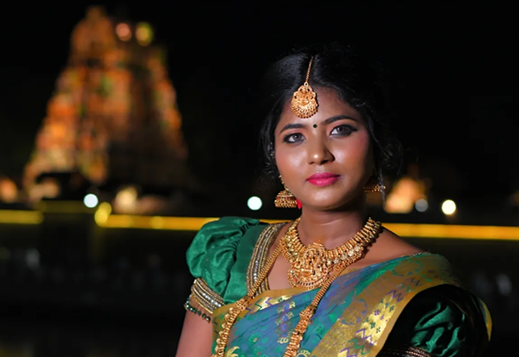
Gold jewellery: Temple weddings call for traditional gold over diamonds or stones. The makeup is designed to complement gold tones.
Practical Considerations
Early start: Begin makeup by 4:30–5:00 AM for a 7–8 AM muhurtham.
Temperature: Temples can be warm. We use sweat-resistant formulas for all temple wedding applications.
Dress code: Some temples have strict dress code requirements (no sleeveless, head covering needed). Confirm with the temple before finalising the look.
Frequently Asked Questions
Yes. For warm outdoor temples, airbrush is actually our preferred choice for longevity.
A well-applied kohl eye is traditional and appropriate. We avoid extreme glitter or dramatic modern eye looks for morning temple ceremonies.
Conclusion
A temple wedding is a sacred occasion — and your bridal look should reflect that beauty and reverence while making you feel absolutely radiant. Book your consultation with Asifa Bridal Studio today.